I am in my final year of a combined Law and Media (Communications & Journalism) degree at UNSW. My passions include creative writing, reading Victorian fiction, and researching about health and fitness, technology, theology and philosophy. I write and blog about topics that inspire me, such as law school or life in general. I sincerely hope you feel inspired after reading my posts!
If you would like to view my CV, please contact me at fionalu@live.com
#currentlyreading - Cecilia
#currentfavesong - Prince of Peace - Hillsong United
Do we control computers or does the computer control us?
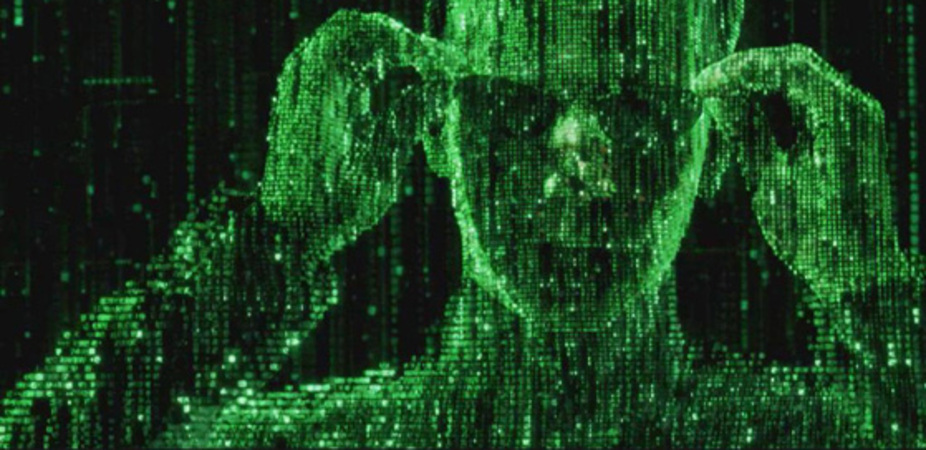
MORPHEUS: “You are here because you know something. What you know, you can’t explain. You felt it your entire life. There is something wrong with the world. You don’t know what it is, but it’s there, like a splinter in your mind, driving you mad. It’s this feeling that has brought you to me. Do you know what I am talking about?”
NEO: “The Matrix?”
MORPHEUS: “Do you want to know what it is? Have you ever had a dream, that you were so sure was real? What if you were unable to wake from that dream? How would you know the difference between the Dream world and the Real world?”[1] (The Matrix, 1999).
I have often questioned what Morpheus refers to, which is the “Dream world” and the “Real world,” when investigating the impact of virtual worlds on an individual’s experience of virtual and physical space. What is the “Dream world” you ask? It is a computer-generated simulation of a three-dimensional environment that can be interacted physically with in real-time on an Internet server. In other words, it is a virtual world. The virtual world is redefined space,[2] born out of the user’s creativity. This synthetic space can be viewed from a computer screen, Google glasses or Oculus Rift goggles. It has the capacity to enhance the user’s five senses through video, audio, images or touch when it projects real and virtual information. Such information replicates the “state of things” as they actually exist.[3] It is shaped by what the user wants to see and experience.[4] This occurs when the computer “reaches out” to the user.[5] In response, the user attempts to incorporate his/her world and the social setting he/she is embedded in,[6] into that space. The user’s input and the system’s output form together a stream of visual information,[7] to the extent that the user can see the real world with virtual objects superimposed or composited with it.[8] This is the technical aspect of virtual worlds. However, this blog post will not explore the mechanics of virtual reality or augmented reality. Instead, I will investigate the social and psychological aspect of virtual worlds and whether the user is in a state of delusion when both the Dream world and Real world collide. By pursuing this line of inquiry, we can come to understand how interaction is embodied within those settings, and thus determine how that computation and the setting fit together.[9]
Firstly, virtual worlds promote identity construction. Users are encouraged to adopt a ‘persona’ and join social groups that assist in developing their ‘character’. Secondly, there is a currency system that underpins transactions and dealings between users and the developer. Thirdly, the user can choose to adhere to the world’s internal clock (e.g. EST), their local time, or when there is a sunrise and sunset in the virtual world. Fourthly, users can foster friendships with each other. Of course when users access a simulated reality, they can maintain monogamous or polygamous relationships. These intimate, lifelike and graphic experiences are intense, to the extent that both the “Dream world” and the “Real world” can overlap. Hence, making it difficult to distinguish between the two as separate “worlds” and the identities they generate in them. Thus, according to Geoff Mulgan, as the Internet advances, the very notion of a clear dividing line between reality and virtual reality becomes blurred.[10] In the next few paragraphs I will address this idea with reference to the 2D virtual world ‘Habbo.’
(Source: This image is of the customization settings on Habbo Hotel. The user can choose to save an outfit that other users have created, or individually select what type of clothing and accessories their Habbo should wear).
Imagine a place where you can indulge in fantasies you greatly desire. You have the power to constantly alter your facial appearance or body without having to undergo surgery. Neither do you have to worry whether these modifications are permanent. You can use actual money to be converted into virtual currency at a reasonable price. Think about it. You only need to spend $200USD for it to be converted into $1 million virtual dollars. With that much money in your account, you can purchase property, join elite clubs, or access exclusive “VIP members only” content. Better yet, the economy is stable, and you can trade or sell virtual items in the marketplace. Why not become an entrepreneur like Anshe Chungwho owns a self-entitled company and a real estate agency on Second Life? If you think business affairs are rather mundane, you can participate in role-playing. Why not try to boast your popularity online by shape shifting your human avatar into a pirate or vampire. It all seems like a dream, because it is a dream. Virtual worlds are “enhanced” reflections of the “everyday world,” and the ways humans experience the “everyday world.”[11] Paul Dourish explains these virtual environments are creating whole new forms of interaction and activity.[12] When the user intimately interacts with the setting,[13] the human brain is overpowered by sensory over-stimulation.[14] The brain can be deceived and manipulated to believe that such reality exists. Arguably, the user’s physical experience of virtual worlds cannot be separated from the reality that his bodily presence is in the Real World.[15] What I mean by this is, as Dourish phrased, we act in the Real world or the Dream world by exploring its physical affordances, which inspire/construct our social actions.[16] This includes how humans interact and respond to their needs. The virtual body may be seen as the user’s real body,[17] which may be the reason why the “customization process” is so detailed. Although computer simulated environments have the ability to transform reality and negate or alter the usual laws of nature (e.g. law of physics),[18] it is obvious the unrestrained amount of control and freedom produces a dream-like experience. Thus, as a result man creates a substitute reality.[19]
Habbo Hotel
Simply, in the context of Paul Dourish’s theory that computation is a human experience,[20] it involves electrical, symbolic, textual and graphical forms of interaction.[21] Habbo Hotel is a two-dimensional space that enables graphical interaction.[22] Sulake, the developer, describes this space as a “richly colourful, multi-dimensional virtual community and social game to which users join by creating a fully customized online character called a ‘Habbo.’”[23] The Habbo is viewed from a third party’s perspective, and the user cannot see through the eyes of their avatar. This virtual space aims to attract children and teenagers with its simplistic design and graphics. For this reason, a bird’s eye view of their character immerses the user in the environment to see everything in that space and frame of their screen. How the space is arranged makes activities in that environment easier, and, ultimately, affects how the user works his/her Habbo.[24] On the other hand, in Second Life, which predominantly aims to attract adults with its mature content, it is a powerful virtual reality that positions the user in the shoes of their avatar. Being a 3D virtual world, Second Life also immerses the user to step out of their avatar to view the environment from a distance.
I remember accessing Habbo when I was in grade eight, after receiving free credit from a Girlfriend magazine. After one day of exploring a variety of spaces and hundreds of rooms created by other users, I was hooked. The graphics were simple, and the ‘game’ did not really have a goal besides customizing your avatar and role-playing with other users. When I first logged in, information was distributed around a two-dimensional space and I was able to rearrange it selectively.[25] The ‘Navigator,’ which contained tabs and links to other spaces, was placed in my periphery. That application exploited my ability to focus on one area while attending to other activity on the right side of my visual field.[26] Since the information is spread out over a large screen area, I could move between windows simultaneously. This feature opened new dimensions for interaction. I was able to multi-task while interacting with other users, and attend to other tasks on my computer. I was able to talk to my friends on Habbo and my friends on MSN. Personally, the line between the Real world and Dream world is blurred once the user begins to foster intimate friendships with other users.
(Source: Watch the video from 4:48 to understand the latter of this post).
In Habbo there is a room titled “Wedding Chapel.” This room is what the title suggests, a wedding reception. I remember observing a user presiding over the wedding, and the bride and groom standing in front dressed in formal clothing. Each typed their vows and inserted asterisks or hyphens before and after words to indicate they were virtually commanding an action that the Habbo could not physically do. For e.g. *Hugs you tight* or -Kisses your cheek-. These users were emotionally involved with each other to the extent that they actually perceived their relationship to transcend the Dream world. They acted like a real couple and were willing to commit to each other despite they had never met in person. In this case, the Dream world can collide with the Real world if both users decide to meet in person and further advance their relationship. For me, I could never merge both worlds. I had two identities, one in a virtual space and one in real life. I disguised my identity by giving myself another name and a fake age. I could not connect to others because Habbo seemed like a game to me.
Source: My Habbo homepage. On the left is the ‘Navigator,’ and next to it is a ‘Style box’ where I can change my Habbo’s gender, clothing, hairstyle, skin and facial appearance. On the right is the ‘Catalogue.’ This box displays items for sale in exchange for virtual credit, and users can convert intangible credit into tangible credit that can be used for trading. For e.g. if a user has 51 Habbo credits, he/she can purchase a gold bar that is valued 50 credits. That gold bar is tangible credit as the user can see and have their Habbo physically hold it in their ‘hand.’ The ‘hand,’ is literally a large virtual hand. It holds all the furniture bought from the catalogue. In this situation, what amounts to the Real world is the credit that was purchased with real money. Once the real money becomes virtual credit, it can only be used in the Dream world.
As illustrated above, Habbo has an economy that distinguishes it from ‘Second Life’ and ‘IMVU.’ The user’s assets can be stored in items and traded for ‘rare’ objects no longer available in the catalogue. The reason why the developers of Habbo has initiated this system, is due to the fact users cannot directly transfer virtual credit to other users, which ‘Second Life’ and ‘IMVU’ can do. When I came across “trading rooms,” I witnessed people trading “respects” for access rights to a room. “Respects” are valuable gestures, which can only be awarded to another user three times a day. Consequently, I had to study how much the objects I purchased were worth. I visited fan sites and used their calculator to determine how much credit I could earn if I were to sell it.
(Source: This image shows the value of objects found in the catalogue. How this is calculated depends on how long ago the object was released, the price in the catalogue before it became rare, and popularity).
Additionally, I had to familarise myself with terminology the developers had invented and general Internet slang. The virtual space required that I understood the Habbo ‘code of conduct,’ hence it was necessary they quizzed me on what amounts to bullying and the language I had to use when faced with a situation that required reporting another user for abuse. There were symbols such as a ‘hazard’ sign, ‘stop’ sign, and ‘exclamation’ sign I had to utilise in this Dream World. These symbols are universally recognised in the Real world. The user brings their knowledge of these symbols by applying it into the virtual world. By accepting an invitation to access this virtual world, I was forced to apply meaning to such terms, in order to adapt and belong in that space. Words such as “cred,” “rares,” “furni,” and “bobba,” embody textual interaction that draw on my linguistic skills and my ability to create meaningful sentences.[27] I learnt that “cred” is short for “credit.” “Rares” meant limited edition objects, “furni” is Habbo furniture and “bobba” replaced swear words. Thus, Habbo offered new modes of communication the user had to adapt to.
These modes challenge the Real world and the user’s approach to real life situations. Such virtual worlds encourage users to apply their Real world skills in the Dream world. Sometimes what happens in the Dream world can have an effect on the Real world, which further cements the idea the two worlds can merge. In 2007, a Dutch teenager was arrested for stealing virtual furniture from rooms in Habbo. He was accused of stealing 4,000 euros worth, which he retained from scamming other users. Thus, what unite the Real world with the Dream world, and vice versa, is the user’s desires. His/her needs that they want to satisfy in one or the other. Whether that is to find romance, friendship, earn money or popularity. Both worlds have a strong hold on a person, and are in constant battle for the user’s attention. It is certain virtual reality alters the dynamics of the Real world to promote diversity, social and cultural fragmentation.[28] But, the Dream world ceases to exist without the Real world validating its existence. The Real world lays the foundation for the creation of the Dream world. Hence, the Dream world is an alternative reality to the Real world. Virtual worlds offer insight into social, economic, and creative activity. When individuals spend more time in virtual space, the virtual world will take on a life of its own, and, as a result the real world will slowly diminish in importance.[29]
To end this post, I embedded this video down below which demonstrates what constitutes augmented reality. Enjoy.
(Source: ‘Virtual reality dinosaurs bring Jurassic Park to life’)





 Feel free to check out my other websites and social media accounts.
